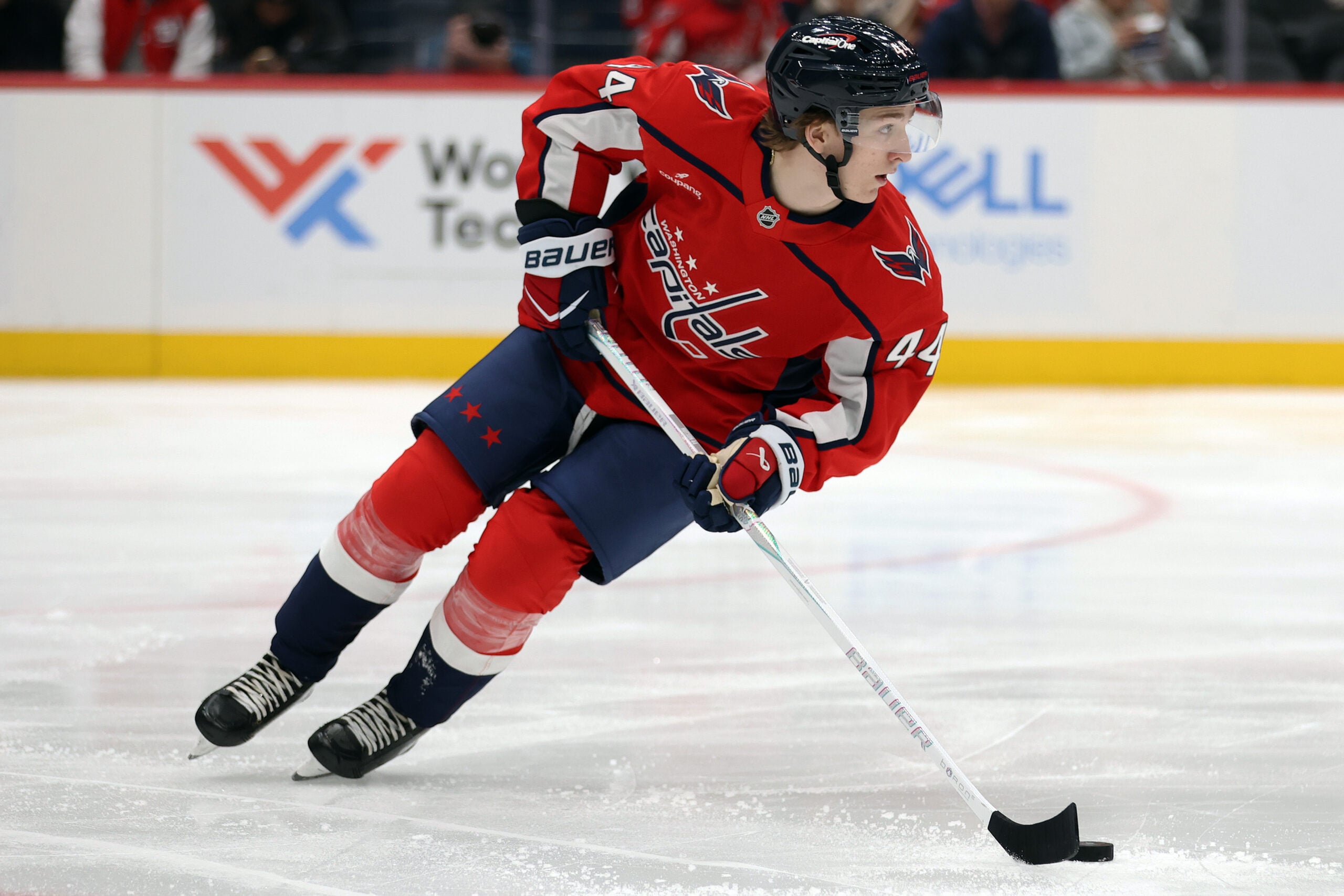
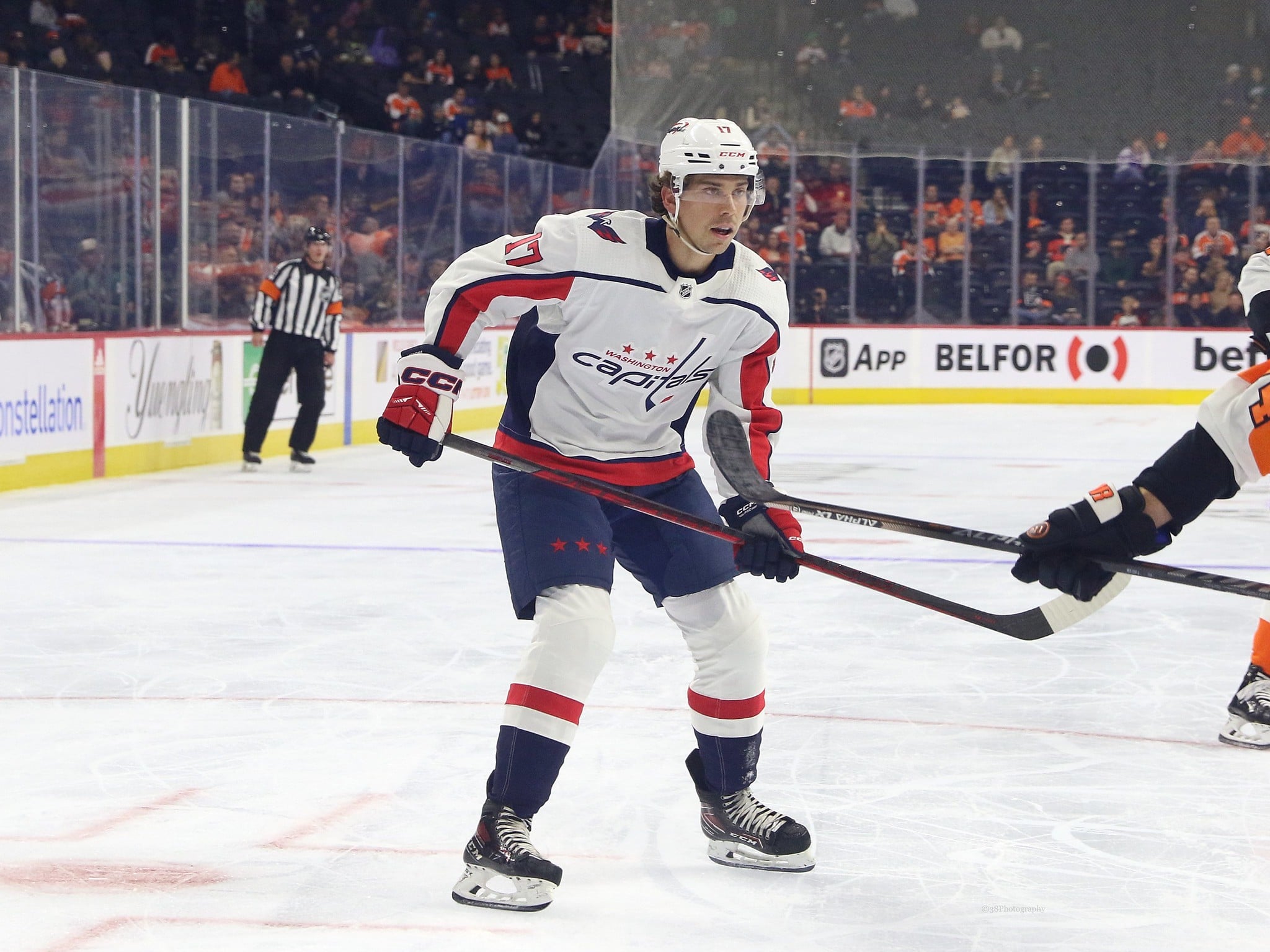
The Washington Capitals signed Oliver Suvanto to a three-year entry-level contract on Tuesday (July 14), then announced in the same release that he will spend 2026-27 on loan to Tappara in Liiga. The deal carries an average annual value (AAV) of $1.075 million at the NHL level and $87,500 in the American Hockey League (AHL).
Who the Capitals Drafted
Suvanto is a Turku kid who has some Liiga roots in his family. His father, Harri Suvanto, played 13 seasons in the league, most of them with Lukko in Rauma before a move to TPS. Oliver came up through the TPS system, then left for Tampere at 16.
That move paid off immediately. In 2024-25, he put up 42 points in 42 games for Tappara’s under-18 team, won the Esa Peltonen Award as the league’s best forward, made the First Team and won a championship.

Initially, Suvanto skipped the under-20 level entirely and walked into Liiga, holding a roster spot on the best club in Finland from opening night. He finished with two goals and nine assists in 48 games, the most points by any player age 17 or younger in Finland’s top flight last season, and he dressed for a playoff game as Tappara beat KooKoo 2-1 in Game 7 to win the title.
Finland used him at both the World Junior Championship and the Under-18 World Championship, and he was named a top-three player on his country’s team at each. NHL Central Scouting ranked him first among all international centers and third among all international skaters.
Washington took him 18th overall on June 26 in Buffalo using a pick acquired from the Anaheim Ducks in the John Carlson deadline trade. He is 6-foot-3 and 213 pounds, and he does not turn 18 until Sept. 3.
The Numbers That Explain Him
Microstat tracking charts every puck touch a player makes and ranks him against his draft class on a percentile scale, where 50 is average. Suvanto’s card is one of the strangest in the class.
His offensive-zone puck retrievals sit in the 81st percentile. His shots per 60 minutes fall in the bottom 10 percent. His overall offensive involvement lands at the 24th percentile. He wins pucks back at an elite rate and almost never finishes the play himself.
The passing is where it gets interesting. He attempts slot passes at an 87th-percentile rate and completes them at a 33rd-percentile rate. He attempts controlled zone entries at a 69th-percentile rate and completes them at a 20th-percentile rate.
Suvanto attempts dangerous passes as often as almost anyone in the class and completes them less often than almost anyone. He wins the puck by absorbing contact, one hand on the stick and a defender leaning on him, then tries to pass from that same posture. His best skill and his worst outcome are the same action.
What Tappara Runs, and Where Suvanto Fits
Rikard Grönborg was hired in Tampere to renew a club famous for the neutral-zone trap and rigid defensive-zone coverage. He did it by turning Tappara into the most aggressive forechecking team in Liiga. Finnish analyst Petteri Sihvonen put it plainly: Tappara stopped trapping and started pressing, pressing and pressing again.
It worked. Tappara scored the most goals in the league (226), allowed the fewest (149), finished first with 117 points and won the championship.
Now place Suvanto inside it. He opened the season centering the second line and posted a season-high 15 even-strength minutes against TPS. Then, Oiva Keskinen returned from Columbus Blue Jackets camp on Oct. 3, and Suvanto’s ice time collapsed. By March, Suvanto was on the wing of the fourth line.
I don’t think one should expect much offensive output from him going forwards if he continues on the fourth line, though, as it has been clearly constructed to eat minutes by defending and forechecking.
Source – ‘Scouting Report Oliver Suvanto Tappara vs KalPa, Liiga – Mar 6th, 2026’ – Lassi Alanen – Elite Prospects – March 14, 2026
Watching that team in March, Lassi Alanen noted the unit had been “constructed to eat minutes by defending and forechecking.” I feel like this line holds a deeper meaning on this team. On Grönborg’s Tappara, that was the whole team. Suvanto was not a fourth-liner in the North American sense. He was running to the club’s core identity while the skill lines rested, and an 81st-percentile retrieval rate does not seem like a coincidence.
Tappara’s system also heavily relies on their defensemen to break up an opponent’s rush and clear the pass. Joni Tuulola won the Jari Kurri Trophy as the playoffs’ most valuable player, only the second blueliner ever to take it. The possession exists to walk a defenseman into the slot, and Suvanto’s role in that sequence was to win possession and move the puck to a teammate. Someone else was expected to finish the play. His 24th-percentile involvement rate is a reflection of his role within the lineup, not a lack of ability. His 11 points in 48 games say more about how he was used than what he is capable of producing.
Why Another Liiga Year Builds a Capital
Washington has cleared the runway. Connor McMichael went to the St. Louis Blues in the Jordan Kyrou trade. Hendrix Lapierre went to the Pittsburgh Penguins. Nic Dowd signed in Vegas. Three centers are out, replaced by veterans, and Suvanto is now the only one of consequence left in the system.
Here is the part nobody has written yet. While most NHL coaching staffs rely heavily on highly structured, named set plays, like the Florida Panthers’ Corner Swarm, the Vancouver Canucks’ Punt, or the Vegas Golden Knights’ Marner Delay, Washington does things differently. Under Spencer Carbery, the Capitals operate on core principles rather than rigid scripts. Their tactical identity is built entirely around fluid principles for offensive-zone possession, forechecking, and defensive-zone breakouts. Observers widely consider them the best-run team in the league, describing Carbery as an astute, pragmatic, and highly adaptable tactician.
That environment matters enormously for a raw 18-year-old. A set-play team needs a prospect who already fits a predetermined mold. A principles-based team can teach one how to play.
Carbery teaches the offensive zone as a map of graded areas, and two of his foundational rules read like they were written specifically for Suvanto. The first instructs players to keep the puck off the wall and to avoid committing more than two skaters to the boards at a time. The second dictates that in the high-danger areas where mismatches are created, skaters must use changes of speed, forced switches, and cutbacks.
Suvanto is currently a wall player. That is his entire identity, and Washington’s offensive-zone teaching says, do not live there.
Watch Suvanto’s game closely, and you will begin to notice a pattern. He escapes cycles from below the goal line by cutting back on pressure before using a weight shift to create separation. When an opposing defenseman activates, he reads it, cuts back along the wall, and slips the puck into the space behind the pressure. At the Under-18 World Championship, some of his best sequences came when he delayed his pass just long enough to pull a defender out of the lane before releasing it.
Every time Suvanto cuts back off pressure before he passes, it works. Every time he passes straight through pressure, it does not. Carbery’s tactical blueprint has the fix written right into it.
The rest of the fit is almost too neat. Washington’s low defensive-zone coverage puts the center in a three-on-three battle near the net alongside both defensemen, which is exactly where Suvanto already excels. Their penalty kill pressures high, and denying entries through angling and stick length is the specific trait evaluators singled out during his World Junior Championship run. Furthermore, their offensive-zone possession relies on active defensemen initiating shape changes, which is precisely what Tappara’s system asked of him.
Did a great job pinning opponents to the boards to force turnovers. The biggest limiting factor is still his skating, although it’s more his footspeed than mechanics or mobility.
Source – ‘Scouting Report Oliver Suvanto Tappara vs HPK, Liiga – Oct 3rd, 2025’ – Janik Beichler – Elite Prospects – October 5, 2025
There is one more layer. A few seasons ago, the one major element Washington lacked, and the one Carbery explicitly rebuilt the system to fix, was speed. Suvanto’s primary deficiency is speed. However, talent evaluators are near-unanimous that his issue is straight-line footspeed, not his edges. Janik Beichler notes that his mechanics are fine, and in his film, he has plenty of examples of tight cutbacks. Carbery’s system does not demand elite straight-line velocity; it demands changes of speed and sharp cutbacks, tools Suvanto already owns. He just has to be pushed to use them.
Tampere is where that growth happens. Benjamin Rautiainen, who led Liiga with 77 points, signed with the Tampa Bay Lightning. Rikard Grönborg is now coaching in Sweden, replaced by Kari Jalonen. The ice time that previously squeezed Suvanto onto the fourth line is wide open, and the coach who assigned those limited minutes is gone.
Suvanto knows the gap in his game. “First of all, I want to improve a lot in my offensiveness,” he said after the draft.
The ultimate reality of modern hockey is that winning games happens in the unpredictable space between structured plays. That is Suvanto’s current gap. He wins pucks inside heavy physical contact, but he must learn to make plays in transition between structures. Because of this, the most important number to track in Tampere this season is not his point total. It is whether Jalonen deploys him in situations that force him to cut back before he passes, because mastering that specific habit is the difference between Suvanto becoming a career penalty killer and anchoring Washington’s third line.
Free Newsletter
Get Washington Capitals coverage delivered to your inbox
In-depth analysis, breaking news, and insider takes - free.
Subscribe Free →