There’s another interesting story hiding in the Toronto Maple Leafs’ salary numbers, and this one is sitting on the blue line. In a post last week, I took a deep dive into the contracts of the Maple Leafs forwards. Today, I will do the same with their defencemen.
The Maple Leafs have about $31.4 million committed to their defencemen. That’s roughly 30 percent of the salary cap, which doesn’t sound outrageous for a team that believes it can contend. But when you actually break down where that money is going, the picture gets a lot more interesting.
Toronto isn’t really paying for youth. It is paying for experience, reliability and, in Darren Raddysh, one enormous bet that a breakout season wasn’t a one-off.
The Maple Leafs Have Put a Lot of Faith in Darren Raddysh
The first thing that jumps out is Raddysh’s contract. Eight years at $8.5 million per season is a massive commitment to a defenceman who just put together a 22-goal, 70-point season. If that’s the player Toronto is getting, the contract could look pretty good.
Raddysh is 30, he’s a hometown player, and he’s coming off the kind of offensive season the team desperately needed from their blue line. Toronto is betting that he can become a legitimate top-pair defenceman, move the puck, run a power play, and continue to produce offence.
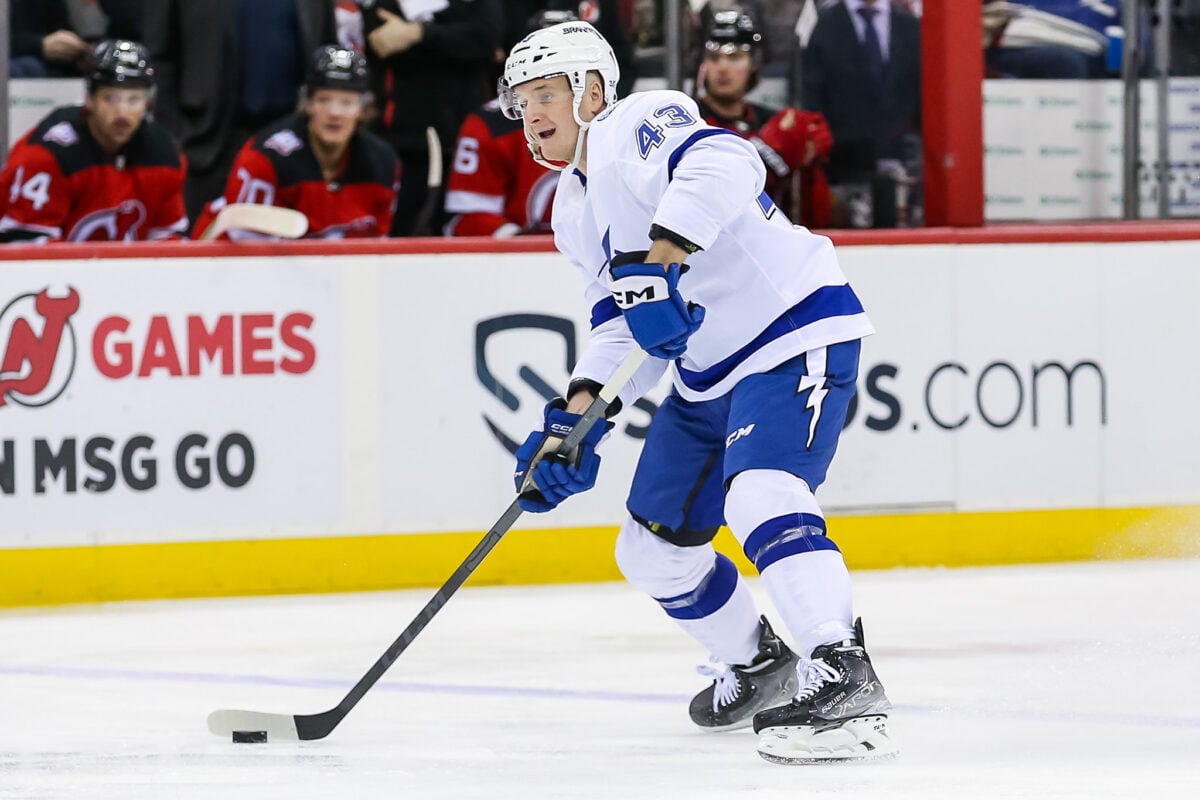
That’s the good news. The uncomfortable part is that he’s getting paid for what he just became, not what he was before. If the 70-point season is the beginning of something, Toronto has found its offensive defenceman. If his production drops back toward his previous levels, that $8.5 million contract could become very difficult to move a few years down the road.
That’s the big bet sitting underneath this entire defence. Morgan Rielly is still making $7.5 million, and at 32, the Maple Leafs are hoping the new coaching staff can get something more out of him. Jake McCabe is at $4.51 million and looks like one of the more sensible contracts on the blue line. Chris Tanev is another $4.5 million, although he’s now 36 and the clock is obviously ticking.
Add those four contracts together, and Toronto has more than $25 million committed annually to those four defencemen. That’s a lot of money. Toronto has again concentrated significant money on a small group of core players, which was the biggest critique of the so-called Core Four era.
The Maple Leafs Are Paying for Experience, Not Youth
This is where the salary structure tells us something about the roster. Toronto’s blue line is built to win now. Rielly is 32. McCabe is 32. Tanev is 36. Oliver Ekman-Larsson is 35. Troy Stecher is 32. The most obvious young player with real upside is Emil Andrae, who is 24 and making just $1.55 million.
Andrae might actually be the most important player on the blue line that nobody is talking about. At that salary, the Maple Leafs need him to become a legitimate NHL regular who can eventually handle bigger minutes. If he does that, Toronto suddenly has a young, inexpensive defenceman who can take some pressure off the older players. If he doesn’t, the Maple Leafs are left with a blue line that gets older without getting much cheaper.
There’s another thing I find interesting here: the right side looks much better stocked than it has in previous versions of this team. Raddysh, Tanev and Stecher give Toronto options, while McCabe can move around. The left side becomes a little thinner once you get past Rielly and Ekman-Larsson. That probably isn’t an accident.

Looking back at how the new general manager, John Chayka, constructed his roster, he built it around roles. This defence looks exactly the same. Raddysh provides offence. McCabe brings physicality and penalty killing. Tanev provides defensive responsibility. Rielly gives the team puck movement and experience. The rest are there to fill in the gaps.
It makes sense. But it also doesn’t leave Chayka much room to fix things later.
The Salary Structure Could Become a Problem
This is the part that makes me wonder whether the Maple Leafs really have much flexibility if something goes wrong. If Raddysh becomes the defenceman Toronto thinks he can be, the whole thing looks different. Suddenly the team has a modern puck-moving top-pair option and can use the veterans in more specialized roles.
But if Raddysh struggles and one of the older defencemen declines, Toronto doesn’t have a lot of obvious escape routes. Rielly has a full no-move clause. Tanev is getting older and has had a tough time staying on the ice. McCabe is signed through 2029-30. And the team can’t simply wave a magic wand and create another $7 million of cap space at the trade deadline.
That’s why Andrae matters so much. He is the internal solution. If he develops into a real NHL defenceman, the Maple Leafs have a young player who can take on more responsibility without eating up a huge chunk of the cap. If he doesn’t, Toronto may eventually have to spend even more money to replace the production and minutes they’re currently buying from older players.
What the Salary Numbers Really Tell Us
The Maple Leafs have spent aggressively to fix their blue line. That’s pretty obvious. But what they’ve really bought is experience and certainty for the next couple of seasons, along with one enormous gamble on Raddysh.
This isn’t a defence designed for three years from now. It’s designed to give Toronto a chance to win now. And you have to think that’s exactly what Chayka wanted.
The Maple Leafs have spent years being criticized for lacking enough depth or defensive structure. This time, they’ve gone in the other direction. They’ve paid for players who know how to play hard minutes, kill penalties, move the puck and survive playoff hockey.
The risk is age. The risk is Raddysh’s contract. And the risk is that Andrae doesn’t develop quickly enough to give the group some youth. But if Raddysh’s breakout is real and Andrae becomes the player Toronto hopes he can be, this could actually be a pretty smart construction.
If those two things don’t happen, though, that $31.4 million blue line could start looking very expensive very quickly.
Free Newsletter
Get Toronto Maple Leafs coverage delivered to your inbox
In-depth analysis, breaking news, and insider takes - free.
Subscribe Free →