In the high-stakes environment of the NHL Playoffs, championship aspirations often hinge on more than just top-tier talent; they rely on the emergence of unexpected heroes from the bottom six. As the Montreal Canadiens navigate a gruelling first-round matchup, the narrative of their playoffs has been redefined by a mid-series tactical pivot that unlocked an effective trio.
By uniting Kirby Dach with Alexandre Texier and Zachary Bolduc, blending three distinct playing styles into a single cohesive unit, Montreal has found a depth-scoring engine that has provided them the depth to now be a legitimate threat, capable of deciding the outcome of their first-round series against the Tampa Bay Lightning.
Canadiens Find Depth
The top line centred by Nick Suzuki has been productive, but only on the power play (PP). When playing at five-on-five (5v5), the Lightning have been able to shut down the top offensive weapons at head coach Martin St. Louis’ disposal. Thankfully, the line of Dach, Bolduc and Texier has been the Canadiens’ saving grace at 5v5 play.
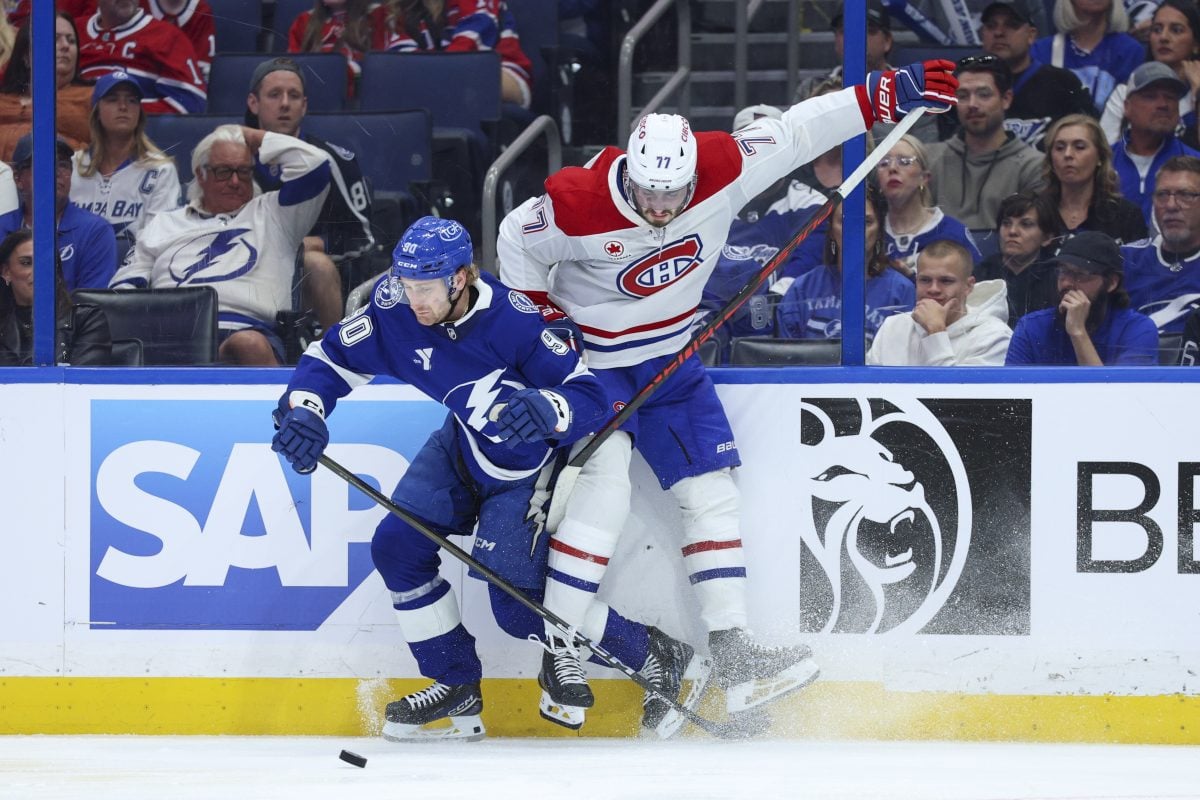
After being united in Game 3 following a reshuffle by St. Louis, the trio provided an immediate spark that helped turn the tide of the series. Often deployed as a physical third or fourth line, they have combined for five goals and 11 points in just four games, proving that Montreal’s depth is currently their greatest asset in a tightly contested postseason.
The impact of this unit is best exemplified by their breakout performance in Game 3, where they combined for six points to drive a 3–2 overtime victory. Dach, in particular, used the new line to script a redemption story, rebounding from early series criticism to notch a goal and an assist in the win.
Statistically, the line has been dominant at even strength. Their ability to sustain pressure in the offensive zone has not only led to goals but has effectively worn down the Lightning’s veteran defensive corps.
The line’s ability to pin the Lightning in their own end stems from their complementary playing styles, which include reach, speed, and physicality. Dach uses his massive frame and reach to protect the puck along the boards, effectively closing off the outlet play for defenders, while Texier acts as a relentless puck-hound, using his quickness to win races to loose pucks and force turnovers on the forecheck.
Meanwhile, Bolduc’s versatility to also provide pressure on the forecheck, win one-on-one board battles, attack the net and find soft ice in the high slot, provides a constant outlet that forces the opposing defence to collapse inward. By cycling the puck low-to-high and maintaining a high F3 presence to take away exit lanes, they consistently extend their shifts, exhausting veteran defenders and forcing the Lightning into the kind of long, defensive-zone grinds that eventually lead to coverage breakdowns.
Canadiens Depth Performs
While they have been labelled as the “fourth line” and have all averaged around 10 minutes per game, which seems like a fourth line, until you realize that they have played almost exclusively at 5v5. While the Suzuki and Phillip Danault lines have defensive assignments to shut down Tampa Bay’s top lines, the role for the Dach line is very different. They are to play a physical style that pushes the pace and keeps the puck in the offensive zone, and it has been effective in doing just that. They are essentially the de facto second line at 5v5.
This trio has emerged as a critical depth unit against the Lightning. As a line, they lead the Canadiens with over 57% expected goals for and have generated far more high-danger scoring chances than they’ve given up (Texier leads them at this at 69.2%). Individually, Bolduc is in the top 10 in the NHL Playoffs for expected goals for at 5v5 at over 68%. Dach, along with Bolduc and Texier, has provided the balanced scoring needed for their current playoff run.
Series Impact
There is a cumulative impact of this pressure as it wears down opponents in several key ways. First, the mental fatigue from the prolonged defensive zone time leads to chaos that forces defenders into split-second, high-stakes decisions under duress, often resulting in missed assignments or mistakes in coverage. It also disrupts the flow by disrupting line changes. By maintaining possession, Montreal can execute on-the-fly changes with fresh legs while the Lightning’s tired defensive pair is trapped on the ice, creating a massive energy mismatch for the next 20–30 seconds of the shift.
There is also a physical impact as the constant battling for the puck along the boards against players like the 6-foot-4 Dach or a physical Bolduc is physically draining, sapping the energy of veteran defenders over the course of a seven-game series. Their value in this area will be most felt in Game 7.
Beyond the scoresheet, the trio has balanced Texier’s energy and versatility with Bolduc’s improved confidence and Dach’s physical presence on the puck. While stars like Suzuki and Cole Caufield naturally draw the most defensive attention, this depth line has consistently exploited matchups to provide the heavy lifting during critical moments. As the Canadiens head into a decisive Game 7, the continued physical play and offensive production of the Dach-Texier-Bolduc line remain essential for Montreal to advance past a perennial contender like Tampa Bay.
Free Newsletter
Get Montreal Canadiens coverage delivered to your inbox
In-depth analysis, breaking news, and insider takes - free.
Subscribe Free →