Roberto Luongo goalie retired this week. He is the greatest goalie in Canucks history and is certain to be inducted into the Hockey Hall of Fame. That’s his legacy as a player.
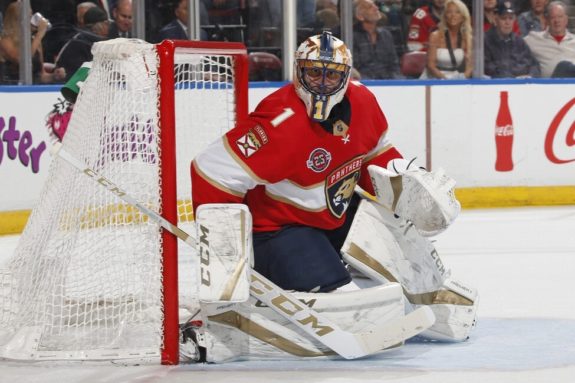
However, his retirement leaves the Canucks in a crunch. The way his contract was structured, his retirement before the end of the deal leaves the team with a salary cap hit of approximately $2.2 million per season as a “recapture penalty.” That penalty will cost the team well into the future.
Luongo’s Career with the Canucks
As he wrote in an open letter to Florida Panthers fans, Luongo’s body told him it was time to retire. When he reviewed his regular season’s play,
Good for him. He’s had a great career. He wore jersey #1 because, “It kind of says it all, doesn’t it?” When he was on his game, Luongo was good enough to back up his swagger with stellar play. His 448 games for the Canucks were second only to Kirk McLean’s. His 252-137-50 record (and 38 shutouts) are the best for any Canucks goalie.
Luongo’s amazing 72 saves in four overtimes against the Dallas Stars during the 2007 Stanley Cup Playoffs is still a record. Notably, Luongo was named the captain of the Canucks and held that position (rare for a goalie) for two seasons from 2008-10. The move showed the team’s respect for his leadership.
During the 2006-2007 season, Luongo won 47 games, with a 2.28 goals-against average, and a .921 save percentage. That season, he earned nominations for the Vezina Trophy, the Hart Memorial Trophy, and the Lester B. Pearson Award. He holds Canucks records for most wins in a season (47), most shutouts (9), and lowest goals-against (2.11).
When the current CBA was negotiated, in addition to regulating salary structures, it introduced the Cap Recapture Penalty to deal with front-loaded contracts signed under the previous agreement. The following players’ contracts were determined to be illegal – Kovalchuk, Savard, Pronger, Hossa, Henrik Zetterberg, Mike Richards, and Luongo.
As a result, Luongo’s contract became an albatross. When he was traded to the Panthers at the 2014 NHL Trade Deadline (a trade that brought Jacob Markstrom to Vancouver), the Canucks had to negotiate a complicated “who pays Luongo” agreement and retain part of his salary. To trade him, the Canucks had to also negotiate a split of the Recapture Penalty, as shown by the following chart.
| Year Luongo Retires | Cap Recapture Penalty for Vancouver Canucks | Cap Recapture Penalty for Florida Panthers |
| 2018 | $2,130,093 | $1,453,240 |
| 2019 | $2,840,124 | $1,453,240 |
| 2020 | $4,260,186 | $73,147 |
| 2021 | $8,520,373 | $0 |
Where Does That Leave the Team?
The

The only good news is that Luongo’s retirement in 2019 is better than if he retired in 2021. That scenario would have pegged the Canucks with $8
Fortunately, all this will in time be forgotten. When it does, we can remember Luongo for what he was – a stellar Canucks goalie. Until then, Luongo’s contract is still costing the team.
Free Newsletter
Get Vancouver Canucks coverage delivered to your inbox
In-depth analysis, breaking news, and insider takes - free.
Subscribe Free →