The New York Rangers have a goaltending problem, but that does not mean they need to make the biggest trade available. Igor Shesterkin is out for the season, while Joonas Korpisalo is expected to miss the next four weeks. That leaves New York evaluating whether its internal options can carry the workload without forcing an expensive decision.
For the Edmonton Oilers, that situation creates a potential opportunity involving Tristan Jarry. A deal would depend on several developments, particularly Frederik Andersen’s recovery and Devon Levi’s continued performance. However, if Edmonton eventually becomes comfortable with an Andersen–Levi tandem, Jarry could offer the Rangers experienced help while giving the Oilers flexibility to improve elsewhere.
The Rangers’ Patience Makes Sense
On the Oct. 10 edition of Saturday Headlines, Elliotte Friedman downplayed the possibility of Connor Hellebuyck joining the Rangers, pointing to the long-term financial commitment involved. “I don’t think it works, particularly because both goalies would have long-term deals after this season if they were both there,” Friedman explained. He also indicated that New York would remain patient rather than rush into a move.

That approach makes sense. While losing Shesterkin leaves a significant hole this season, adding another expensive goaltender with several years remaining could create a costly roster problem once he returns. The Rangers need help now, but any solution must also fit their plans beyond this season. Jarry would still require planning, but his commitment is considerably shorter. He carries a $5.375 million cap hit through 2027–28, leaving only one additional season after the current campaign. He also has modified no-trade protection, which would need to be addressed where applicable.
He would not eliminate next season’s financial complications. Nevertheless, one remaining year is a more manageable commitment than building around two goalies on lengthy contracts.
Jarry’s San Jose Win Helps His Case
Jarry gave Edmonton a timely reminder of his usefulness in Saturday’s 3–1 victory over the San Jose Sharks. He stopped 19 of 20 shots, a .950 save percentage for the afternoon, helping the Oilers secure another win. That performance matters for a potential trade because the Rangers would need someone capable of providing dependable starts, rather than simply filling a roster spot. A composed outing helps Jarry’s case, especially when Edmonton is trying to determine how to divide its own workload.
One game does not establish that his consistency concerns have disappeared. Facing 20 shots also makes this a limited evaluation of what he could provide under heavier pressure. The more persuasive evidence would be a stretch of reliable starts showing that he can maintain his positioning, control rebounds and avoid allowing manageable games to unravel. For Edmonton, his bounce-back win creates options. If he continues playing well, the Oilers can keep him as useful insurance or eventually explore a move from a stronger position. They do not need to treat him as expendable simply because another team has injuries.
Andersen and Levi Could Change Edmonton’s Calculation
A potential Jarry trade hinges on Levi continuing to earn Edmonton’s trust. He has already shown encouraging signs, including a 19-save performance against the Seattle Kraken that earned praise from Leon Draisaitl. “I thought he was fantastic, he made a couple of major big-time stops, great timing on those stops, too,” Draisaitl said. Those timely saves are exactly what the Oilers need from Levi on a consistent basis. He does not need to establish himself as a full-time starter overnight, but sustained success against different opponents and heavier workloads would give Edmonton more confidence to consider moving Jarry.
Andersen’s return would give Edmonton another experienced option in net, although his timeline remains uncertain. Head coach Mike Babcock identified December as a possible return date, rather than a firm target. If Andersen returns healthy and Levi continues to progress, the Oilers could feel comfortable moving forward with that tandem. Edmonton would then have to decide whether keeping Jarry as insurance justifies his cap hit and the challenge of finding enough starts for three NHL goaltenders.
Trading Jarry before Andersen is ready would be a different decision. Edmonton would need another backup and would lose protection against a Levi slump or injury. Waiting for Andersen to demonstrate that he can handle NHL starts would make a move easier to justify.
Cap Flexibility Could Matter More Than the Pick
The Oilers would not necessarily need a premium return to benefit from moving Jarry. If the Rangers were willing to absorb his entire contract, Edmonton’s main gain could be the ability to redirect resources toward a top-six forward.
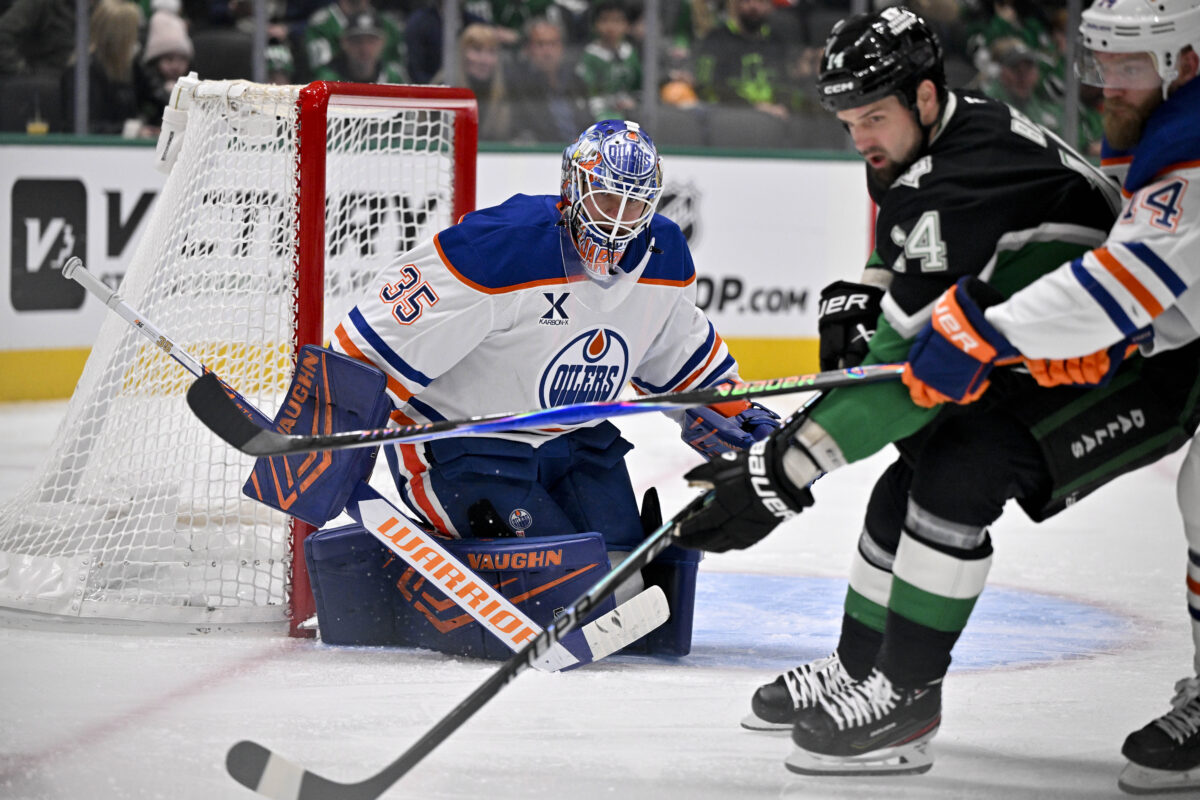
A hypothetical framework would be straightforward:
Oilers receive: A mid-to-late-round draft pick
Rangers receive: Jarry
This is a proposed structure, not a reported negotiation or an established asking price. The pick could become part of a larger package for a forward, although it would likely serve as a secondary asset rather than carry the deal. The greater advantage would be financial flexibility.
Removing Jarry’s full contract would take a $5.375 million annual cap commitment off Edmonton’s books. That figure should not automatically be treated as immediately spendable space: the usable room would depend on timing, replacement costs, Andersen’s activation and the complete roster situation. Retaining salary would also reduce the benefit.
For Edmonton, accepting a modest pick could be sensible if the transaction helps fund a meaningful upgrade. Demanding a stronger return while retaining substantial salary might undermine the main reason to make the deal.
Garand Could Close the Window Before It Opens
The strongest argument against this proposal is that New York might solve its problem internally. Dylan Garand has an opportunity to show he can handle a larger role, and a successful stretch could allow the Rangers to use a Garand–Korpisalo tandem once Korpisalo returns. That makes the timing awkward. Korpisalo’s expected recovery comes before Andersen’s possible December return. By the time Edmonton feels comfortable trading Jarry, New York may no longer need him.
Alternatively, if Garand struggles or the returning tandem proves insufficient, Jarry could remain relevant as an experienced option for the rest of the season. The fit is worth watching, but it requires more than matching an injured team with a goalie. Edmonton needs confidence in its remaining tandem, and New York needs a reason to spend. If both conditions develop, a modest return could produce a useful deal: goaltending support for the Rangers and room for the Oilers to pursue scoring help.
Free Newsletter
Get Edmonton Oilers coverage delivered to your inbox
In-depth analysis, breaking news, and insider takes - free.
Subscribe Free →