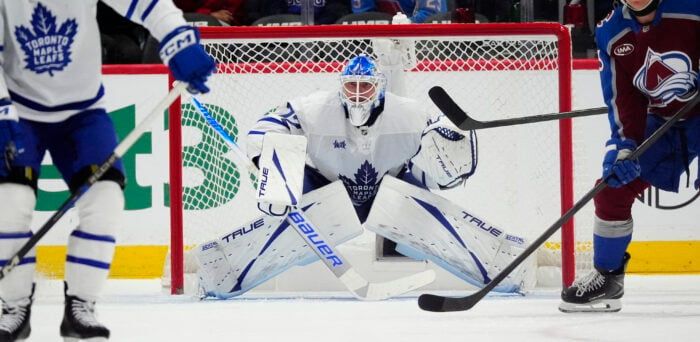
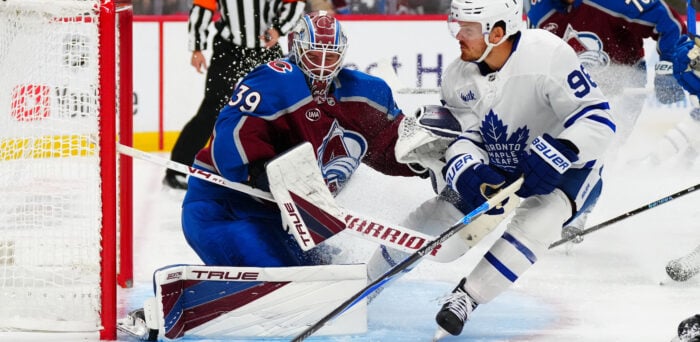
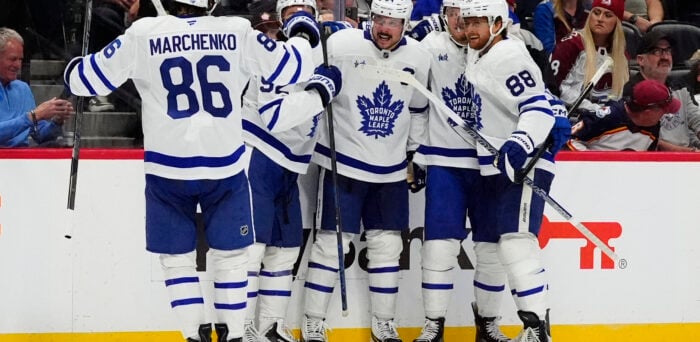
If this past season showed anything about the Toronto Maple Leafs, it’s that scoring depth still isn’t quite where it needs to be. The core can carry the load for stretches, but when things tighten up—especially late in games or deeper into meaningful games—the drop-off becomes noticeable. That’s where this offseason starts to feel less like tinkering and more like a philosophical reset.
The truth is that I don’t want a teardown or a dramatic overhaul, but I do want to see a philosophical shift—one that puts Auston Matthews at the centre of it. Getting him back to being a 60-goal scorer would be a clear priority for what kind of forward group this team wants to build.
That’s what makes the current conversation so interesting. The Maple Leafs don’t need to restock their shelves. But I don’t believe the poor season is a one-off unless they change their focus. They already have enough mature elite talent. What I think they need is better alignment between players, roles, and coaching approach.
For me, that starts with recognizing who still matters, who deserves a bigger bet, and who needs the right environment to truly thrive. With that in mind, three forwards stand out in very different ways: John Tavares, Nicholas Robertson, and Auston Matthews.
Item One: It’s Time to Bet on and Re-Sign Nicholas Robertson
If the Maple Leafs are serious about finding more offence without spending big on the open market, Robertson feels like the most logical internal solution. He’s still just 24, still developing, and still showing flashes of being more than just a depth winger. The frustrating part has always been the inconsistency—not just in his play, but in his opportunity. He’s bounced in and out of roles, and it’s hard to build rhythm that way. That’s partly a coaching issue.

That’s why a longer-term deal actually makes sense here. It’s not just about locking in a player; it’s about committing to the idea of him. Robertson has a scorer’s mentality, a quick release, and the kind of energy this lineup sometimes lacks. If the team gives him stability, which means real minutes, a defined role, and some patience, there’s a reasonable chance he becomes a reliable secondary scorer.
The risk is minimal. With William Nylander, Matthew Knies, and the rest of the core already carrying the heavy load, Robertson doesn’t have to be a star. He just has to grow into what he already shows flashes of being. If he does, the Maple Leafs suddenly have something they’ve been chasing for years: affordable, homegrown scoring depth.
Item Two: John Tavares and the Value of Being Exactly What You Are
I want to thank regular reader Windshear for these ideas. He commented in yesterday’s discussion that there’s a tendency to focus on what John Tavares isn’t anymore. He’s not the dynamic, game-breaking player he was earlier in his career, and that’s fair. But it also misses the point. What he is now still matters. He’s reliable. He’s smart. He produces in ways that don’t always jump off the highlight reel but show up where it counts.
Tavares represents something this team still needs. That’s stability. In a lineup that can run hot and cold, his game doesn’t fluctuate much. He wins battles, he reads plays well, and he contributes without needing everything to run through him. That’s a valuable piece of a successful lineup, especially when you’re trying to support a top-heavy roster.
Beyond the numbers, there’s his presence. He’s not flashy, not particularly quotable, but he sets a tone. Teams don’t just need stars; they need professionals. The Maple Leafs have one in Tavares, and while the spotlight may have shifted, the appreciation probably hasn’t caught up to the reality of what he still brings.
Item Three: Auston Matthews, Coaching, and Unlocking the Best Version Again
With Matthews, everything circles back to one question: how do you get the absolute best out of a player with such a unique skill set? Because when he’s on, there are very few players in the league who can impact a game the way he can. But last season didn’t come close to looking like that version.
Part of that comes down to health. If Matthews isn’t physically right, everything else becomes secondary. But assuming he is, the bigger conversation shifts to usage and system. As the season went on, I had a growing sense that the current approach hadn’t fully played to his strengths. At times, it’s felt like he’s been asked to simplify or round out his game in ways that take away some of the instincts that make him special.
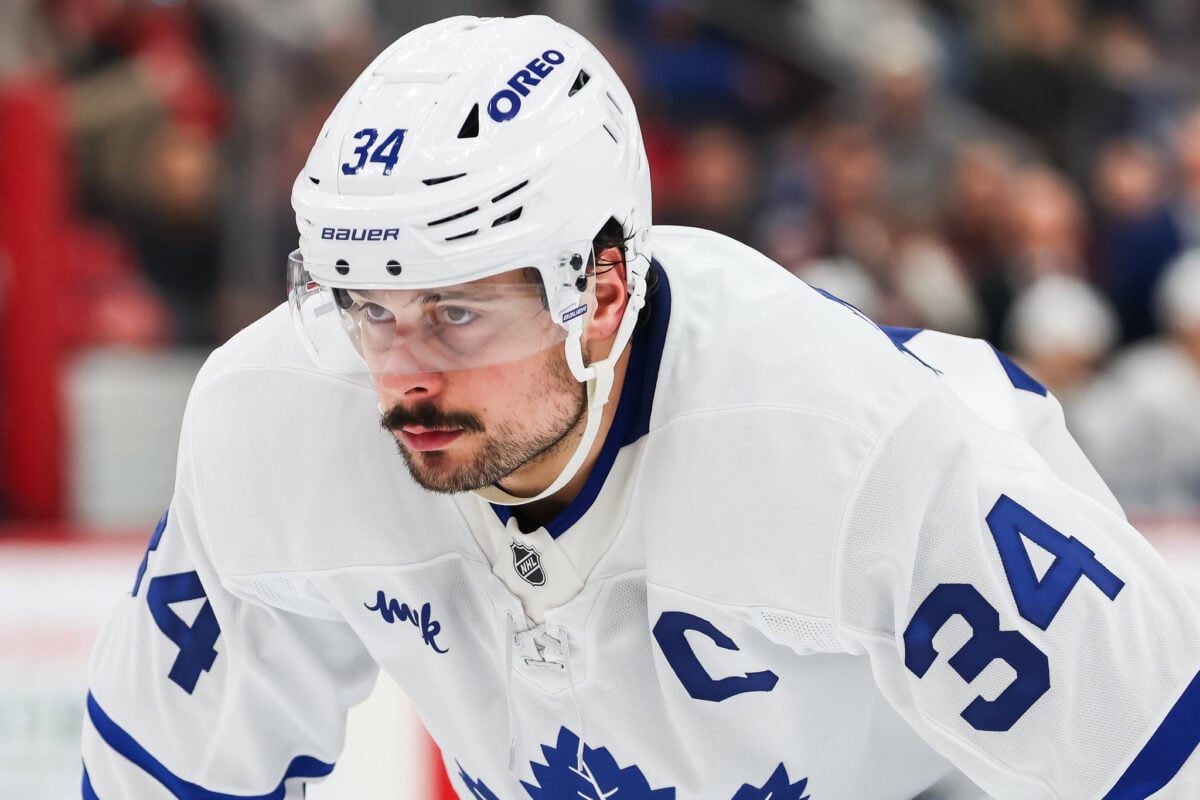
That’s where coaching comes into focus. Whether it’s a tweak or a larger philosophical shift or even a new coach, the Maple Leafs need to create an environment where Matthews thrives. That might mean giving him more freedom, leaning into his offensive creativity, or adjusting how the team generates chances around him. Whatever the answer is, it has to be intentional. Because if Matthews hits his peak again, it is the one change that most quickly moves the needle on this team’s ceiling.
What’s Next for the Maple Leafs’ Forward Group?
Put it all together, and the path forward starts to take shape. Keep and commit to Robertson as a growth piece. Continue to value Tavares for what he still is, not what he used to be. Most importantly, build a system that allows Matthews to be the engine he’s capable of being.
I don’t think the Maple Leafs need a complete overhaul up front. The challenge now is making them fit in a way that finally pushes this group beyond just being good and into something more consistently dangerous.
Free Newsletter
Get Editor Picks coverage delivered to your inbox
In-depth analysis, breaking news, and insider takes - free.
Subscribe Free →