The Toronto Maple Leafs have a new coach, a new message, and a chance to see whether a change behind the bench can help this group become something more than it was last season.
Jim Hiller replaced Craig Berube after Toronto’s disappointing 2025–26 campaign ended without a playoff berth. The Maple Leafs finished 32-36-14, a long way from the team that won the Atlantic Division and advanced to Game 7 of the second round in Berube’s first season.
It’s tempting to look at the change and ask whether Hiller is simply a better fit. That’s probably too easy. The more interesting question is what Hiller wants the Maple Leafs to do differently, and whether his approach can help players perform with greater confidence and consistency.
Playing With the Puck Instead of Giving It Away
One noticeable theme under Hiller has been the emphasis on pace, creative entries, and allowing skilled players to make plays. Toronto has plenty of offensive talent, and there is a reasonable argument that the team needs to take better advantage of it.
Under Berube, the Maple Leafs often gave the impression of a team trying to keep things simple and play a north-south game. That approach has its merits. Getting pucks deep, winning battles, and maintaining structure can be effective, particularly when games become tight. Berube never suggested the team should stop skating or stop attacking.

Hiller’s message, however, appears to offer more room for creativity when Toronto has possession. Rather than treating every risky-looking play as something to avoid, the challenge is to recognize when a skilled player can make a play that creates an advantage. Careless puck management differs from calculated risk. The former gives the opposition opportunities; the latter can open up a defence.
Hiller has also acknowledged that systems across the NHL are often more similar than they appear. His emphasis on team spirit and commitment suggests that he believes the players’ willingness to buy into a plan matters as much as the plan itself. That is an important distinction. A coach can draw up a system, but the players still have to believe in it and execute it.
Accountability Without Losing Confidence
The other question concerns how Hiller handles mistakes, particularly when younger players are involved. Gavin McKenna‘s reduced ice time in Toronto’s October 15 loss to Buffalo became a talking point. The rookie played only 6:36 and did not return for the final 32:54. Hiller acknowledged that the decision was his, explaining that penalties and the long gap between shifts contributed to how the situation unfolded. Hiller subsequently spoke with the rookie, and McKenna said they had a good conversation.
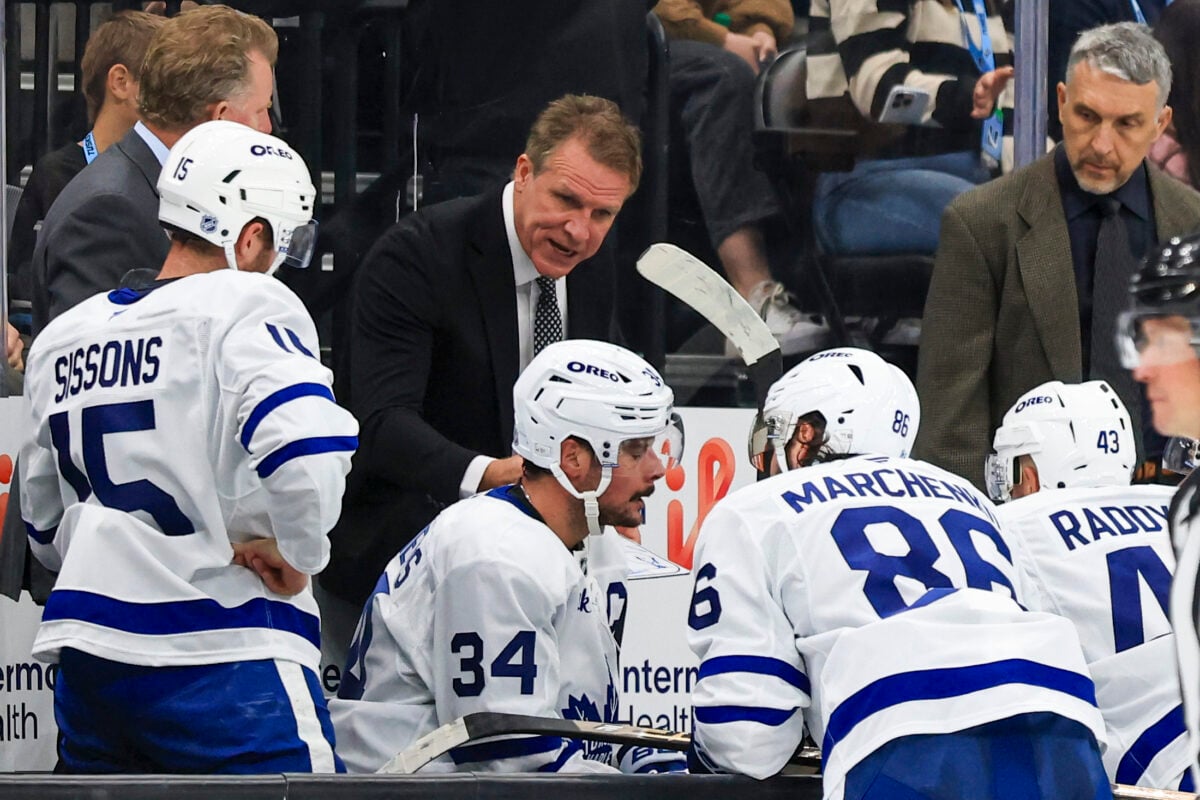
That episode doesn’t automatically tell us whether Hiller’s approach is better or worse than Berube’s. Coaches have to make difficult decisions, and young players must learn that NHL responsibilities extend beyond scoring.
But it raises a useful question: how does a coach hold a young player accountable while helping him keep developing? General manager John Chayka has described Hiller’s approach as one in which accountability and trust can coexist. That is a worthwhile goal, although the real test will come over a season, not a handful of games.
Berube also valued accountability and direct communication. He was hired partly for his ability to set expectations and build a team-first culture. His first season in Toronto produced meaningful success, so it would be unfair to suggest his approach simply didn’t work.
The question is whether Hiller can preserve the benefits of structure and responsibility while helping players feel freer to use their abilities.
The Results Will Tell the Story
A coaching change can provide a fresh start, but it cannot solve every roster problem or eliminate mistakes overnight. Toronto still needs dependable defensive play, consistent effort, and contributions throughout the lineup. Giving skilled players more freedom will only work if they understand when to take chances and when to make the safe play.
The early signs are worth watching, but it is too soon to declare a winner in the Hiller-Berube comparison. Perhaps the most important difference will not be a particular system or lineup decision. It will be whether Hiller can build an environment in which players accept responsibility, trust one another, and play with conviction.
If he can do that, the Maple Leafs may discover that accountability and creativity aren’t competing ideas. They may be exactly what this team needs together.
Free Newsletter
Get Toronto Maple Leafs coverage delivered to your inbox
In-depth analysis, breaking news, and insider takes - free.
Subscribe Free →