The Toronto Maple Leafs‘ recent 6-4 win over the Winnipeg Jets provided some relief after a string of losses. With contributions from veterans like Auston Matthews, Mitch Marner, John Tavares, Max Pacioretty, and William Nylander, Toronto showed they have the talent to compete with the best.
However, the game also highlighted one of the team’s persistent weaknesses: its struggling special teams. Despite impressive five-on-five play, the power play and penalty kill remain problematic. If these cannot be fixed, there’s doubt about the team’s ability to maintain momentum as it aims to move beyond its current wild-card spot.
Maple Leafs’ Power Play Struggles Continue
One of the more surprising challenges for the Maple Leafs this season has been the performance of their power play, currently ranked 30th in the league. With a roster full of offensive talent—especially when Matthews, Nylander, and Tavares are all on the ice—the expectation was for Toronto to have a lethal power play. However, that hasn’t materialized. The game against the Jets again showed this weakness, even in a win.

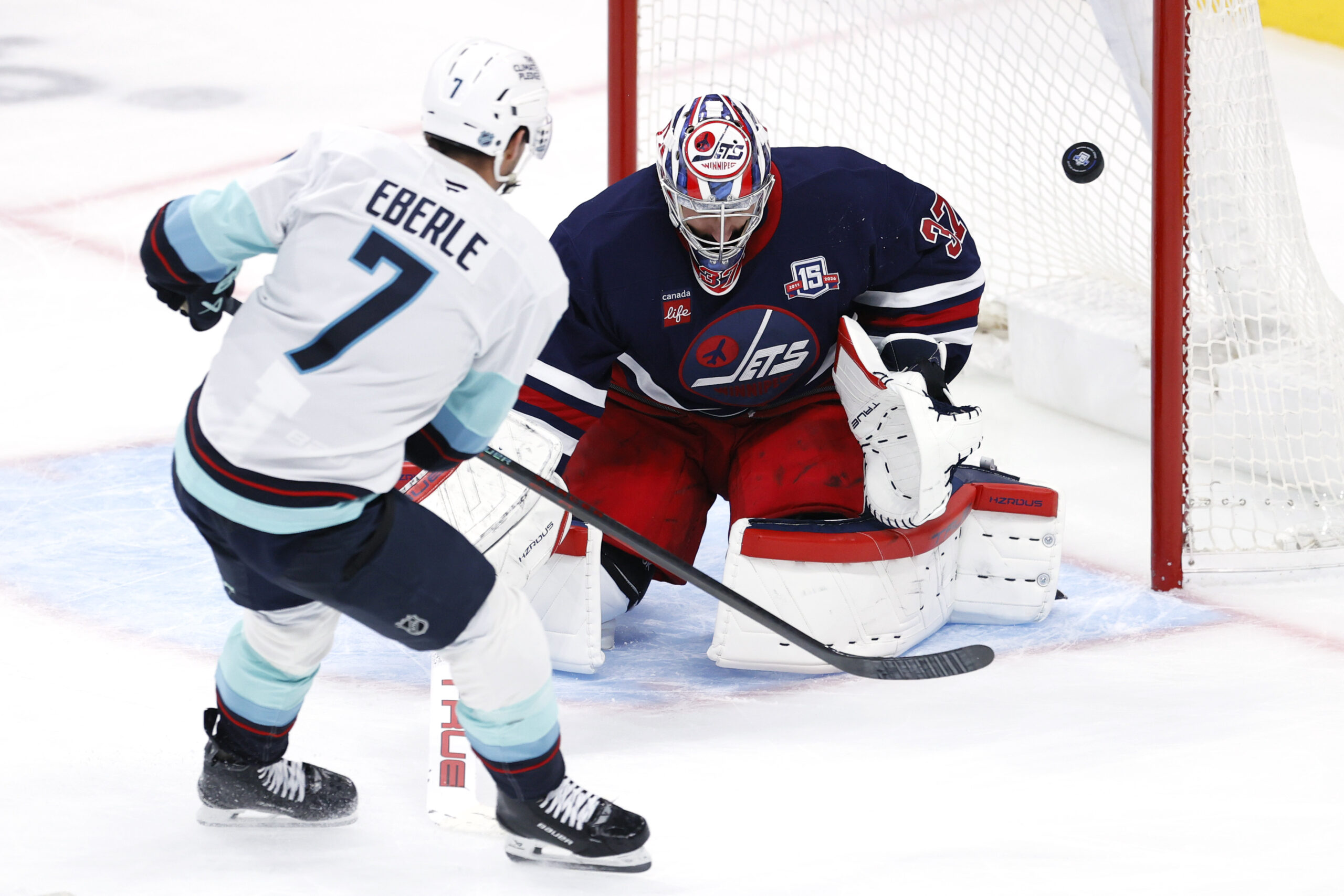
(Photo by Kevin Sousa/NHLI via Getty Images)
The Maple Leafs had two power-play chances in the first period but failed to convert. Their approach seems out of sync, with players hesitating and often reverting to predictable perimeter passing instead of attacking the net. This lack of directness and urgency has led to missed scoring chances, causing frustration for players and fans alike. Power plays are opportunities to seize momentum, and Toronto’s inability to capitalize on these chances keeps their opponents in the game longer than necessary.
Coach Craig Berube might need to go back to the drawing board. A more dynamic setup, with quicker puck movement and more players getting involved around the crease, could help break the team out of this power-play rut. Allowing players like Matthew Knies (who seems to be the one player who’s able to capitalize) or Morgan Rielly to try different roles and formations could inject some energy and variety. Right now, the power play is too predictable and easy to defend against.
Maple Leafs’ Penalty Kill Remains Concerning
While the power play has stalled, the Maple Leafs’ penalty kill has been even more troubling. Despite holding a 2-0 lead heading into the second period against the Jets, they struggled to build on that cushion with their special teams play. Every penalty kill was a nail biter and allowed the Jets to manage a late-game push. Toronto’s PK unit allowed Winnipeg to score two quick goals, capitalizing on defensive mistakes from players like Simon Benoit and Steven Lorentz. This trend of defensive lapses on the penalty kill has plagued Toronto this season, and the game against the Jets was no exception.
The third-period sequence started with a questionable penalty against Oliver Ekman-Larsson, and it quickly became evident that the Maple Leafs were out of control on the penalty kill. Positioning issues, delayed reactions, and failure to clear the puck from the zone gave the Jets more than a few chances to claw their way back into the game.
Allowing opponents to break through so easily puts additional stress on goaltenders like Anthony Stolarz. With a highly-functioning PK, he would have had a much higher goals-against average on the game. The fact that he won the game was more on him than the help he got in front of him.
What Are Coach Berube’s Next Steps?
After a big win, it can be tempting to overlook weaknesses. That said, coach Berube has consistently emphasized consistency and discipline, which are two areas where the special teams need improvement. A good power play requires rhythm, chemistry, and confidence. Might these come from simplifying the approach to create higher-quality scoring chances? In the same way, a solid penalty kill depends on composure, positioning, and quick clears.
Special teams can make or break a team’s chances, particularly in close games where every opportunity counts. For the Maple Leafs to grow into a contender, they must fix their special teams’ struggles. Improving the power play and penalty kill will allow Toronto to dictate games on their terms and potentially climb into a more favourable playoff position.
Looking Ahead to the Season, if the Special Teams Cannot Be Fixed
If Toronto’s special teams can tighten up, the Maple Leafs have the pieces to become a force in the Eastern Conference. Players like Matthews, Marner, Tavares, Nylander, and Knies have shown they can deliver, but without a solid power play and penalty kill, the team risks letting opponents capitalize on their mistakes.
For now, it’s clear that if the Maple Leafs want to turn a corner, they must improve their special teams. With the talent on this roster, there’s no reason Toronto can’t find their groove and make their special teams as formidable as their five-on-five play.
Free Newsletter
Get Editor's Choice coverage delivered to your inbox
In-depth analysis, breaking news, and insider takes - free.
Subscribe Free →