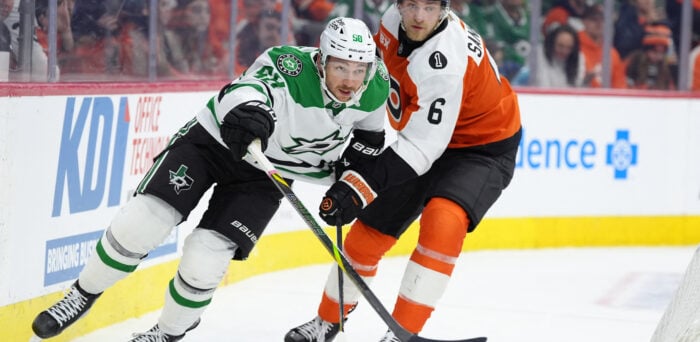
The Vancouver Canucks couldn’t have scripted a stranger opening night on Tuesday. They blew a 5-2 lead against the Edmonton Oilers, watched Evan Bouchard score five points, including a hat trick, gave up the tying goal with 43 seconds left, and still won in overtime. Paul Cotter scored a shorthanded goal. Max Sasson made a terrific play on the winner, and Manny Malhotra earned his first NHL coaching victory.
Now the Oilers are back looking for revenge, while the Canucks get their first chance to show that the wild comeback was more than just opening-night hockey madness.
And while the attention naturally goes to the team’s young players, Elias Pettersson and Thatcher Demko, another Canuck is on the rise. Brock Boeser is only 29, has been in Vancouver since 2015, and has experienced almost everything the organization has gone through.
More importantly, he appears to genuinely like Vancouver and wants to remain a Canuck. That’s a pretty valuable combination for a rebuilding team. Boeser doesn’t have to be the face of the next era. He might become something more important: the veteran who connects the old Canucks to whatever comes next.
The Canucks Are Learning What Resiliency Looks Like
The most interesting thing about Vancouver’s wild opening-night victory wasn’t the six goals. It was what happened after the Canucks gave up three. Malhotra talked afterward about resiliency and players stepping up in big moments. That’s easy enough for a coach to say after a win, but the game actually gave him something to point to. Vancouver held a 5-2 lead with just over 11 minutes left, and somehow the Oilers forced overtime. A team that finished with the NHL’s worst record last season could have folded right there.
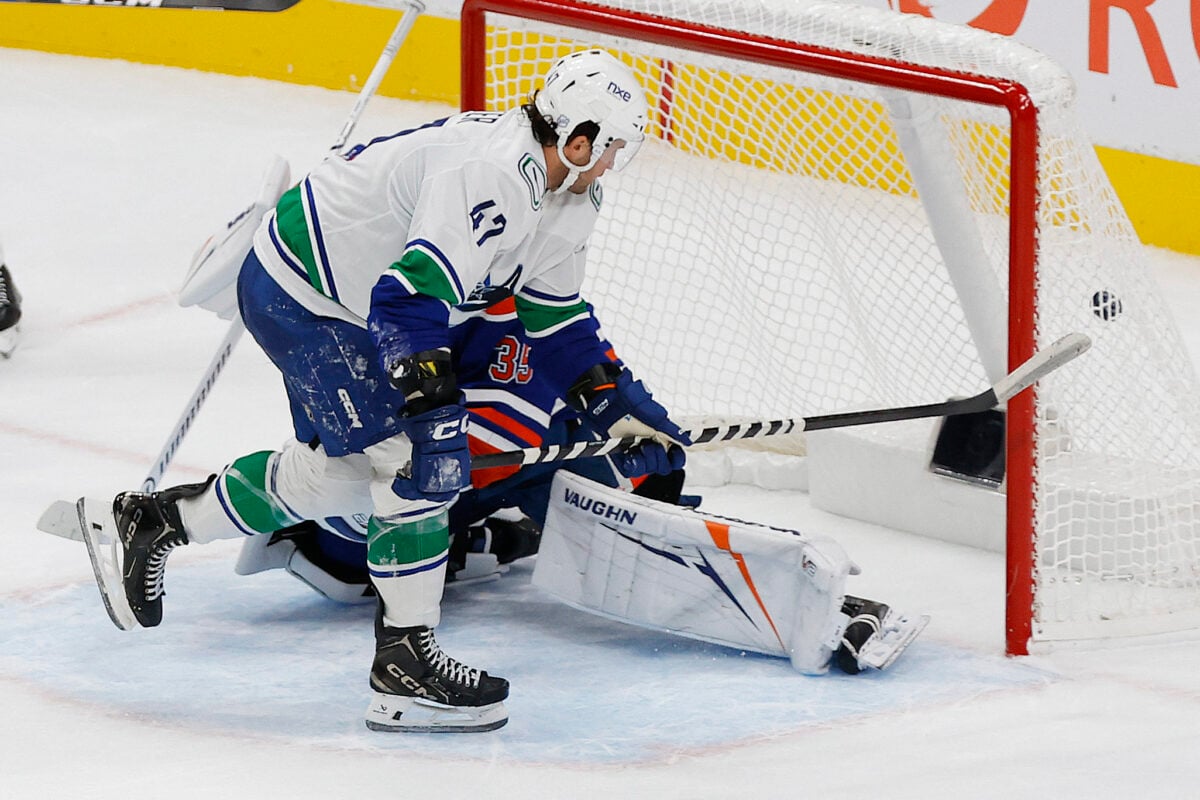
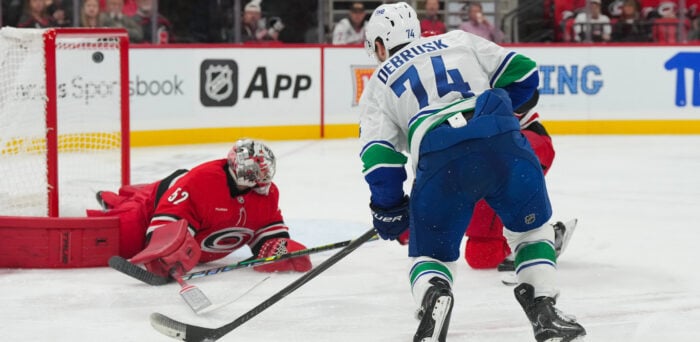
Instead, Cotter won a puck battle in overtime against Ryan Shea, somehow got the puck to Max Sasson while lying on the ice, got back up, rushed to the net and finished the job. That’s a pretty good first chapter for a new coach and a team trying to establish a different identity.
There was also a lesson on the other side of the rink. Head coach Mike Babcock didn’t exactly enjoy his Edmonton debut, calling the loss ridiculous and pointing to turnovers, long shifts and poor decisions. Even Bouchard, despite his historic five-point night, admitted the Oilers needed to be more detailed.
That might be the story of tonight’s rematch. Edmonton has plenty of star power. Connor McDavid and Leon Draisaitl are still Connor McDavid and Leon Draisaitl. But Vancouver has something it didn’t have much of last season: belief. Now comes the interesting part. Can the Canucks do it again? It’ll be tough, but that’s exactly why this rematch matters.
Brock Boeser May Be More Important to This Rebuild Than We Realize
One question from the season-opening media availability probably deserves more attention than it got: What exactly does Brock Boeser mean to a rebuilding Canucks team? It’s an interesting question because Boeser has almost disappeared from the conversation about Vancouver’s future. Pettersson’s potential rebound gets attention. Demko’s health gets attention. The young players coming into the organization get the attention. Boeser, meanwhile, is still here, still scoring and still just 29 years old.
Maybe that’s because he has been around so long that people have stopped noticing how unusual his story is. Vancouver drafted Boeser in 2015. He joined one version of the Canucks, became a star, experienced the excitement of the 2024 Playoffs, watched the organization go through coaching and management changes, and then stayed through the messier parts of the rebuild.
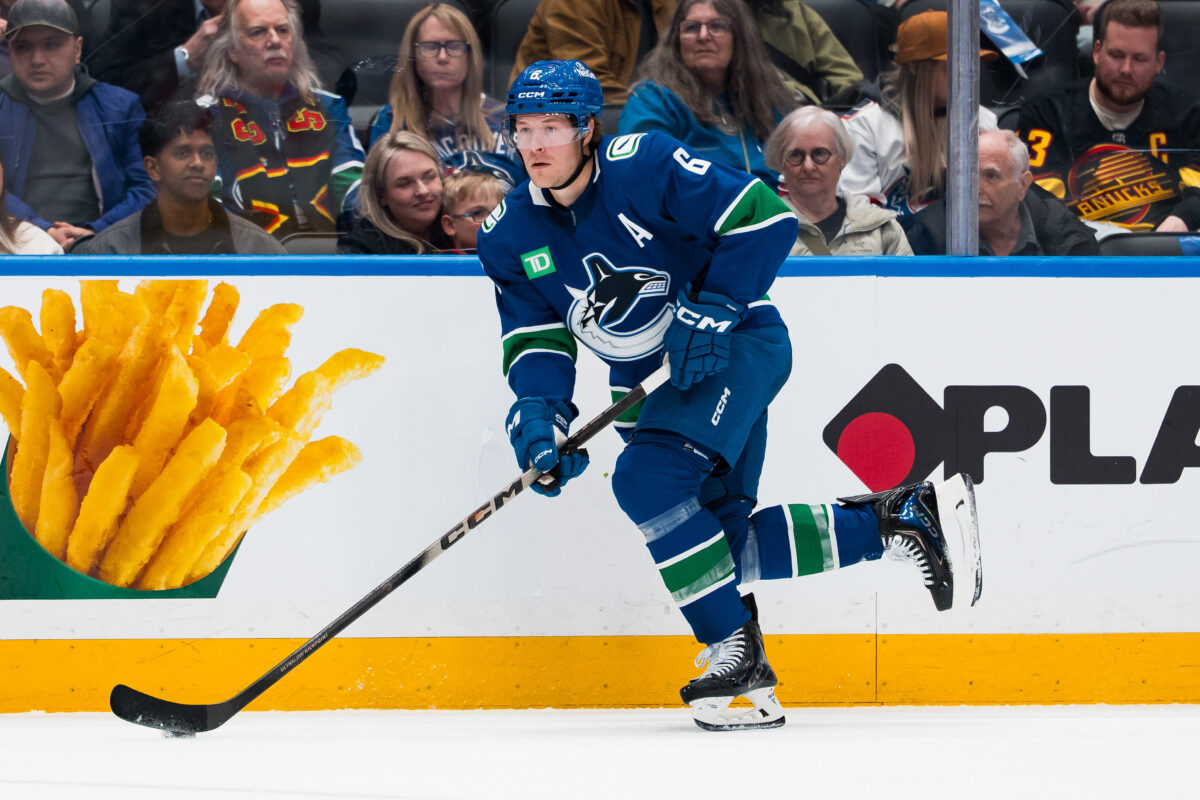
He has seen just about everything a Canuck can see without actually winning a championship. And now that experience could be extremely valuable.
Malhotra has talked about what Boeser can offer younger players because he has experienced both the good and the bad in Vancouver. Boeser is so personally understated that he rarely seems to demand attention. But he doesn’t have to become some great inspirational speaker. He simply has to show the younger players what being a Canuck looks like. That might be more important than it sounds.
Boeser is also an American who seems to love Vancouver and wants to stay there. In today’s NHL, that matters. A player who has spent his entire NHL career with one organization, embraces the city, and wants to stay while a new generation arrives is a valuable piece of the puzzle.
Boeser has already given Vancouver some pretty good memories. He was a major part of the 2024 playoff run, scoring 12 points in 12 games and producing that memorable three-goal Game 4 against the Nashville Predators. Then a blood clot forced him to miss Game 7 against Edmonton.
That night became one of those great Canucks what-ifs. Now imagine a different ending. Boeser arrives during one era, becomes a star, lives through the organizational turmoil and then helps the next group of young Canucks find its way. If they eventually get back to being serious contenders, Boeser could still be there.
What’s Next for Boeser and the Canucks?
And that’s where the Boeser story gets really interesting. His legacy in Vancouver may not be about surviving one rebuild after another. It should be about being part of the one that finally worked. He arrived near the beginning of one Canucks era, and now finds himself watching another version of the organization being built around a younger generation.
Maybe that’s the connection. Boeser doesn’t have to be the face of the next Canucks, and he doesn’t have to carry the rebuild on his shoulders. He has to remain a good player and a professional who wants to be in Vancouver, someone the younger players can look to.
If this rebuild works, his story and the rebuild’s story could become intertwined. And somewhere down the road, people might look back and realize Boeser wasn’t just a holdover from the old Canucks. He was part of the bridge to the new ones.
Free Newsletter
Get Vancouver Canucks coverage delivered to your inbox
In-depth analysis, breaking news, and insider takes - free.
Subscribe Free →