The Vancouver Canucks have been pretty quiet this summer. In fact, they’ve been so quiet that it is tempting to wonder whether general manager Ryan Johnson is finished adding players before training camp.
Daniel Wagner of Canucks Army took a look at that question this week, asking whether the organization should consider adding another free agent. Wagner is an excellent analyst, and what I appreciate about his work is that he often asks a slightly different question than everyone else.
In his recent article, he examined the roster in a way that raises an interesting question. He isn’t simply asking whether the Canucks should sign another free agent. He’s asking where another player could actually fit into a rebuilding roster without getting in the way of the players Vancouver needs to see. That’s a useful place to start and an important distinction.
The Canucks shouldn’t be trying to squeeze an extra five wins out of their lineup. They’re supposed to be developing young players, keeping themselves in position for another high draft pick, and finding pieces that might have value when other teams start looking for help. And Wagner’s look at the depth chart points to two areas worth watching.
The Canucks Have One Obvious Hole at Right Wing
Wagner makes a pretty good case that the Canucks don’t really have to add another forward on the left side. Plenty of players are already competing for those jobs, and adding another veteran could take an opportunity away from someone Vancouver needs to evaluate.
Right wing is a different story. Brock Boeser is there. Brendan Gallagher is there. After that, the lineup is considerably less certain. Linus Karlsson has an opportunity to establish himself, while Jonathan Lekkerimäki is the young player everyone wants to see. Filip Chytil could move over from centre, but that would create other questions in the lineup.
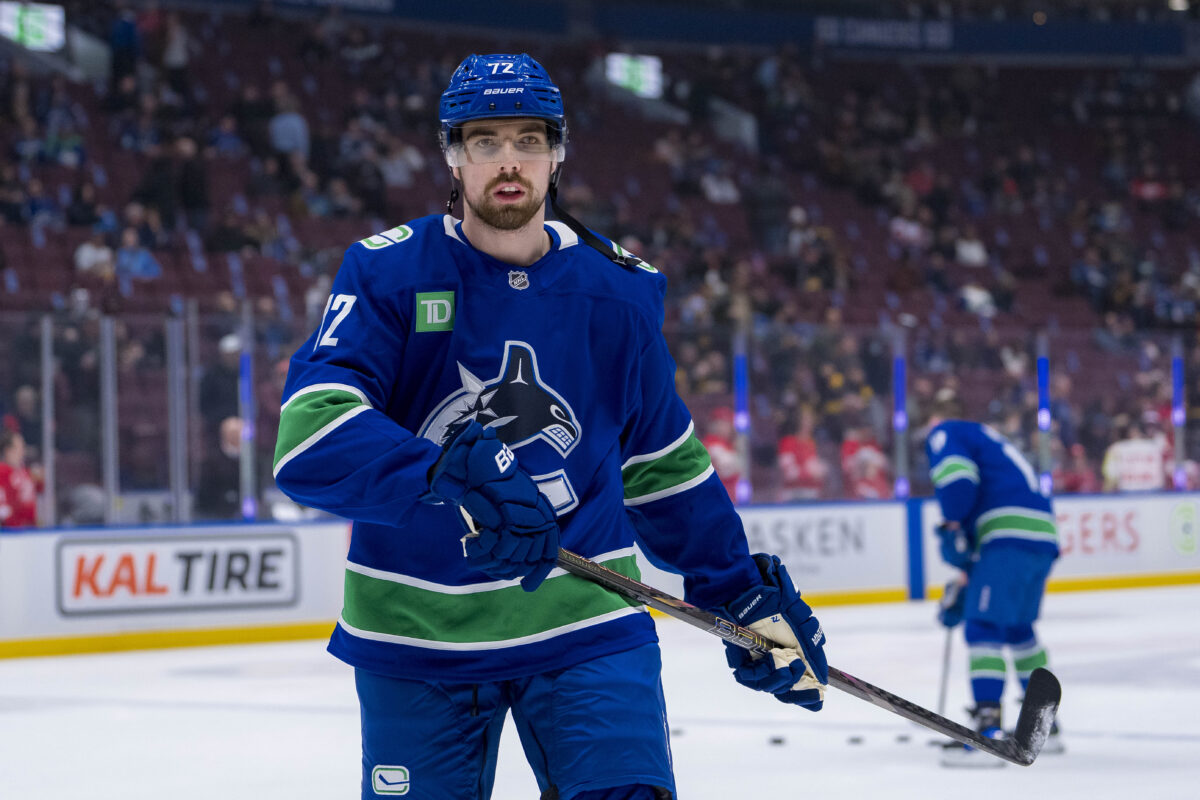
That’s why Wagner’s suggestion of signing free agent Eeli Tolvanen caught my attention. Tolvanen would not simply be another veteran body. He’s still young enough to have some value beyond this season, and he has enough offensive ability that the Canucks could give him a legitimate opportunity in the top six. If he plays well, Vancouver could turn that signing into another asset at the trade deadline.
And that’s the part of the rebuild that is easy to miss. The Canucks don’t necessarily need every free-agent signing to be part of the long-term plan. They can sign a player, give him an opportunity, showcase him and, if things work out, turn him into a draft pick or prospect six months later.
That’s not a bad way to rebuild. The trick is to make sure the veteran doesn’t block Lekkerimäki or another young player from getting the same opportunity.
Vancouver’s Defence Looks Better — But It Doesn’t Have Much Insurance
For a rebuilding team, the Canucks’ defence and goaltending are fairly settled. Jamie Oleksiak and Luke Schenn provide veteran protection, while Filip Hronek remains an important part of the group. More importantly, the Canucks can now give young defencemen like Zeev Buium, Tom Willander and Elias Pettersson a chance to grow without asking them to carry the blue line immediately.
That’s probably the right approach. But there is a difference between having six or seven players you like and having six or seven players you trust when things go wrong. Vancouver doesn’t have much proven NHL-calibre depth behind that group. If injuries hit, the Canucks could suddenly be asking players such as Jimmy Schuldt or Jack Thompson to play meaningful NHL minutes.

That might be fine during the rebuild, but I would still be tempted to add one inexpensive veteran defenceman before the season starts. Not because the Canucks should be trying to improve their record, but because young defencemen don’t develop in a vacuum. Sometimes the best thing a rebuilding team can do for its prospects is make sure they aren’t being asked to play 20 minutes a night because two veterans got hurt.
And there is another benefit. A veteran defenceman who gets squeezed out of the lineup could become a trade asset later. That’s really the bigger lesson from Wagner’s analysis. Vancouver doesn’t need to add players simply for the sake of adding players. It needs to add the right kinds of players.
What’s Next for the Canucks’ Rebuild?
The interesting thing about Vancouver’s roster right now is that there aren’t many places where they need to make a major change. The right side of the forward group is the obvious exception. The defence could use more insurance. But elsewhere, the organization has a chance to see what its young players can actually do.
That’s exactly where a rebuilding team wants to be. The temptation is always to ask how a lineup can be improved. But Vancouver should be asking a slightly different question: Where can a young player be given a real opportunity? That is why I wouldn’t be surprised if management added one more veteran before training camp, but I also wouldn’t be surprised if they didn’t.
If they can find a right winger like Tolvanen who can play meaningful minutes, produce some offence and potentially become a trade chip, that makes sense. If they can find an inexpensive defenceman who provides insurance without taking a roster spot away from a young player, that makes sense too.
Anything beyond that could work against their purposes. Wagner’s article is useful because it highlights something important about this Canucks team. Vancouver isn’t really looking for finished pieces right now. It’s looking for opportunities. The next few months should tell us which young players are ready to take advantage of them.
Free Newsletter
Get Vancouver Canucks coverage delivered to your inbox
In-depth analysis, breaking news, and insider takes - free.
Subscribe Free →