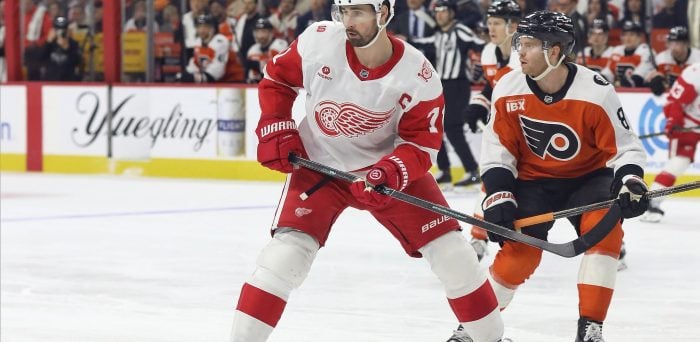
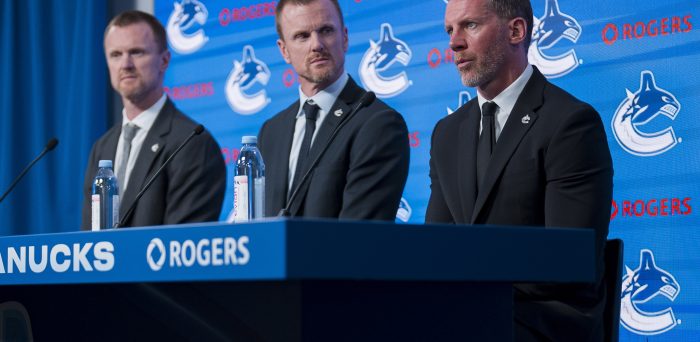
In a wide-ranging discussion with Halford & Brough, former NHL captain Blake Wheeler shared some honest reflections on what it’s like leading a divided locker room, dealing with the heat of playing in a Canadian market, and trying to keep perspective in the high-pressure world of pro hockey. While he was talking about more than the Vancouver Canucks, a lot of what he said hits home when you think about last season’s ongoing controversy surrounding J.T. Miller and Elias Pettersson.
Wheeler, who wore the “C” in Winnipeg for years, knows how tricky leadership can be—especially when your teammates don’t all approach the game the same way. He clarified that there’s no one-size-fits-all solution to getting the most out of a group. His tenure as the Jets’ captain ended with some controversy as he was stripped ahead of 2022-23.
“I was a little more intense, a little more trying to get the most out of myself every single day,” he admitted. While effective for him, that approach sometimes led to frustration when teammates didn’t mirror that same mindset. With the benefit of hindsight and experience, Wheeler believes communication is the key to navigating those differences.
On Miller and Pettersson: Different Doesn’t Mean Divided
“The quicker you have that conversation, the better,” he said. “When you’re just assuming things, holding a grudge, or getting frustrated because someone isn’t how you think they should be—that’s where a lot of tension builds.” For the Canucks, that tension built until something drastic had to be done. Miller went to the New York Rangers, while Pettersson remained and struggled to produce up to his usual standards.
That insight strikes directly at the heart of last season’s Canucks’ leadership structure, where Miller and Pettersson—two of the team’s top players—were often described as having contrasting temperaments. Miller is intense, demonstrative, and fiery. Pettersson, by contrast, is more reserved and internal. Wheeler’s takeaway is that it’s not about changing people but understanding and connecting with them. Leadership, in his view, isn’t demanding sameness—it’s learning how to motivate each player as they are.
The Double-Edged Sword of Playing in Canada
Wheeler also touched on what makes Canadian markets both thrilling and exhausting. “There’s more pressure, yeah,” he said. “But what a gift it is to play in markets where people care that much.” For all the scrutiny players face in Canada—from fans, media, and even from within their organizations—Wheeler believes it’s a trade-off most would gladly make for the chance to win in front of a passionate, hockey-obsessed fan base.
He was candid about the toll it took on him personally. “I wore my heart on my sleeve,” Wheeler said. “This was my life. Every single moment of every day, I thought about how I could be better, how the Winnipeg Jets could be better.” So when the narrative turned critical, he admitted, it was hard to shake off. “I didn’t laugh. I took it personally. It felt threatening.”
No Laughing Matter: Pressure and Identity in Pro Hockey
When asked whether he could laugh off the criticism or media firestorms that come with Canadian hockey markets, Wheeler didn’t sugarcoat it. “If you’re asking me personally, I wouldn’t say that was my approach,” he said. “There weren’t a whole lot of light moments.”

(Amy Irvin / The Hockey Writers)
He admitted that his entire identity was tied to his role as a hockey player, so when his performance or leadership was publicly questioned, it cut deep. Wheeler owned that mindset, but his reflections offer a powerful look into what many NHL players face quietly behind the scenes, particularly those carrying the weight of a franchise in the Canadian spotlight.
What the Canucks—and Other Canadian Teams—Can Learn
Wheeler’s comments might not have been aimed at Vancouver directly (although it’s pretty clear that Halford & Brough invited him toward that end), but they land squarely in the middle of the team’s current storylines. With the Canucks having failed to find balance between two stars who see the game—and carry themselves—very differently, Wheeler’s takeaway is pretty simple: talk it out instead of making assumptions. You don’t all have to be the same to work together.
Much of what Wheeler said aligned with what happened in Vancouver, but it applies anywhere in the league. Whether it’s Toronto, Edmonton, or Calgary, any team chasing a Cup has to deal with the mix of personalities in the room, the nonstop media noise, and the personal weight players carry. Wheeler’s honesty is a good reminder that winning takes more than talent. It takes growth, communication, and leadership that knows how to adapt.
Free Newsletter
Get Vancouver Canucks coverage delivered to your inbox
In-depth analysis, breaking news, and insider takes - free.
Subscribe Free →