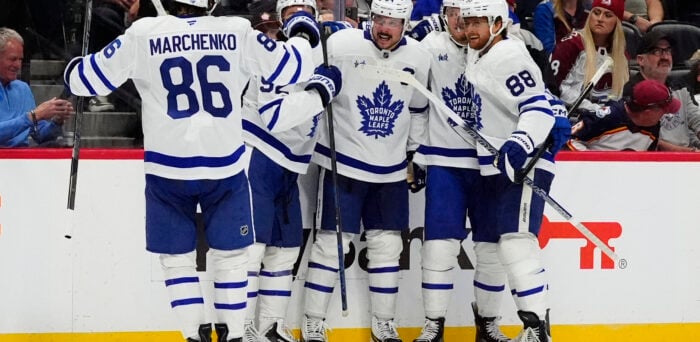
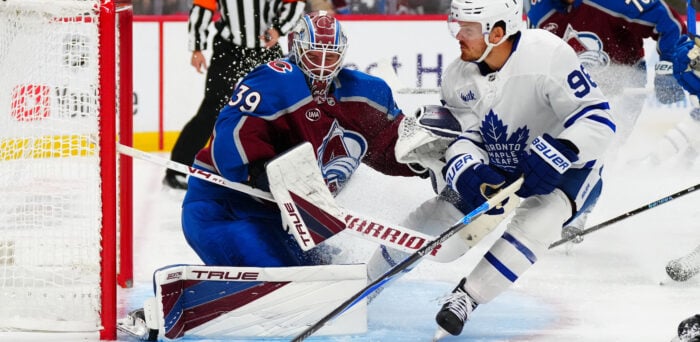
Watching the Toronto Maple Leafs come back from 3–0 down to beat the Nashville Predators 5–4 in overtime got us thinking about something that had very little to do with that game. Five games into a new season, the Maple Leafs are 2–2-1. That’s not exactly something to put on a parade banner. Nothing has been proven yet.
But something does feel different. For much of last season, so much of the conversation around Toronto was about what had been lost and what had gone wrong. Now, almost without noticing it, we’re starting to look forward.
Maybe it’s finally time to close three chapters in Maple Leafs history.
Chapter Number 3 — Brad Treliving
When Treliving replaced Kyle Dubas in 2023, he wanted to change the Maple Leafs’ makeup and culture. He famously talked about adding more “snot.” Toronto became bigger, tougher, and more physical, with the idea that those players would create room for the stars and make opponents think twice about taking liberties. Instead, the team eventually became big and slow.
By prioritizing size and physicality over skill, Toronto actually placed more offensive responsibility on its stars. The supporting cast wasn’t creating enough offence of its own.

Now Treliving is gone, and John Chayka has taken the roster in almost the opposite direction. Speed, puck skill and possession have become much greater priorities. Chayka has moved out as much of the old roster as circumstances allowed and replaced it with players who fit his philosophy.
We’re not saying Chayka has solved everything. He hasn’t. But he has changed the question.
Chapter Number 2 — Craig Berube
Treliving hired a like-minded coach in Berube. The Maple Leafs became more defensively conscious and played a direct north-south game built around getting pucks behind opponents and creating pressure with a heavy forecheck. Again, the result eventually became almost the opposite of the intention.
Toronto’s most creative players were being asked to surrender possession rather than use that creativity. Too often, possession ended with a dump-in. And despite the emphasis on defence, the Maple Leafs actually became considerably worse defensively last season.
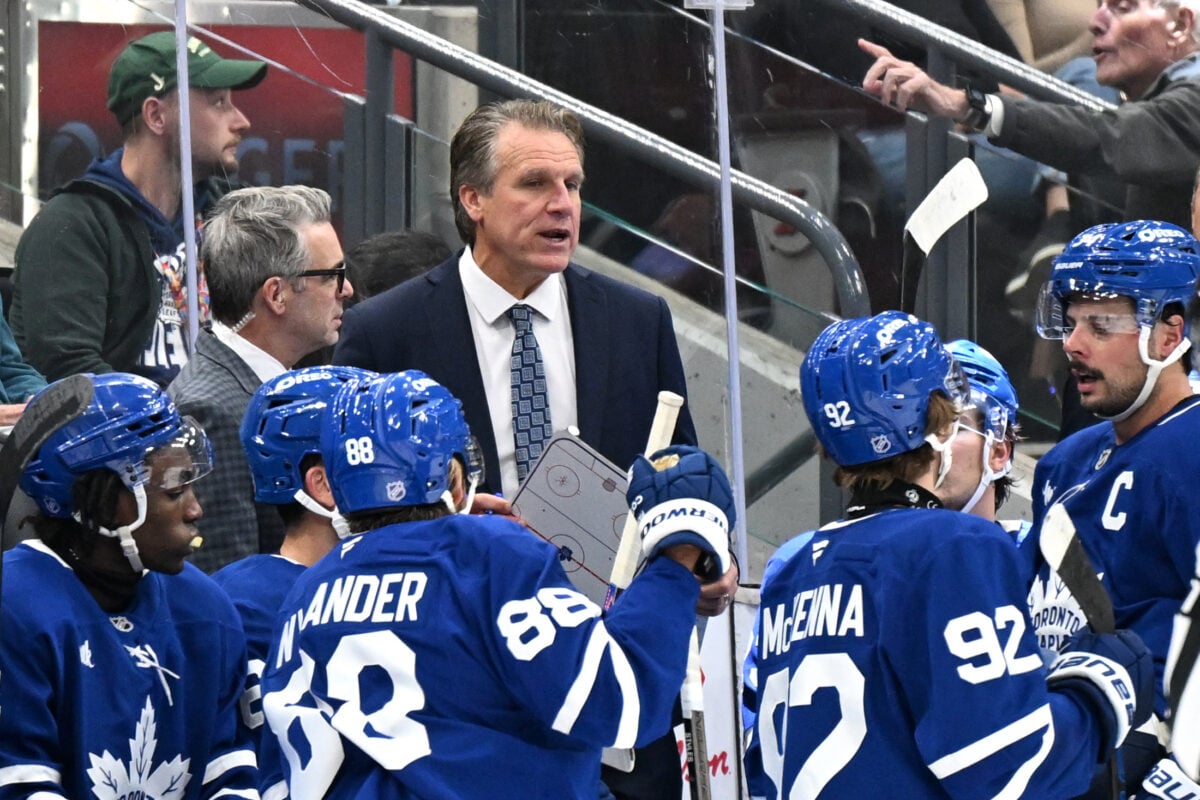
Jim Hiller appears to have a philosophy much closer to Chayka’s. He wants possession. He wants his players to have the puck. Through five games, we’re already seeing signs that Toronto’s stars have been given more freedom to create.
Auston Matthews’ four-point game against Nashville offers a good example. He had three games with at least four points in Sheldon Keefe’s final season, including two five-point games. In 140 games under Berube, he did it once. Four games into Hiller’s tenure, he’s already done it once.
That’s far too small a sample to prove anything. But it’s something worth watching.
Chapter Number 1 — Mitch Marner
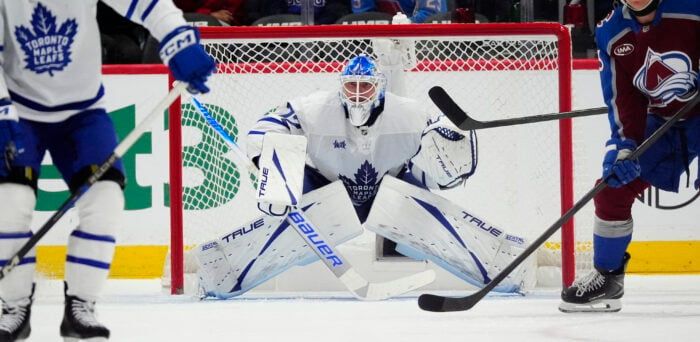
This is the biggest chapter Toronto needed to close. Winning the draft lottery and selecting Gavin McKenna certainly helped change the conversation, but it’s more than McKenna. Chayka has added Sergei Bobrovsky and Darren Raddysh and traded for a younger Kirill Marchenko.
McKenna is projected to become an elite offensive player. Marchenko brings another significant offensive weapon. And suddenly the question surrounding Toronto doesn’t have to be, “How do they replace Mitch Marner?”
Maybe they don’t. Maybe they build something different. That’s the part we’re beginning to find interesting.
This Early in the Maple Leafs Season, The Jury Remains Out
Five games into this new Maple Leafs era, Toronto is 2–2-1. That’s as pedestrian as it gets. Nothing has been proven. Chayka’s roster might not work. Hiller’s approach might not produce the results Toronto hopes for. McKenna might take time. Some or all of what we’re seeing right now could disappear as quickly as it appeared.
But something has already changed. For much of last season, Maple Leafs fans were looking backward — at Marner, at the breakup of the Core Four, at management decisions that hadn’t worked, and at another season slipping away.
Now the organization is looking forward. For the first time in a while, the most interesting question surrounding the Maple Leafs isn’t what they once were or what kept going wrong. It’s what they might become.
Maybe that’s the real change. Despair has been replaced by something a little more useful: Hope.
[Note: I want to thank long-time Maple Leafs fan Stan Smith for collaborating with me on this post. Stan’s Facebook profile can be found here.]
Free Newsletter
Get Toronto Maple Leafs coverage delivered to your inbox
In-depth analysis, breaking news, and insider takes - free.
Subscribe Free →